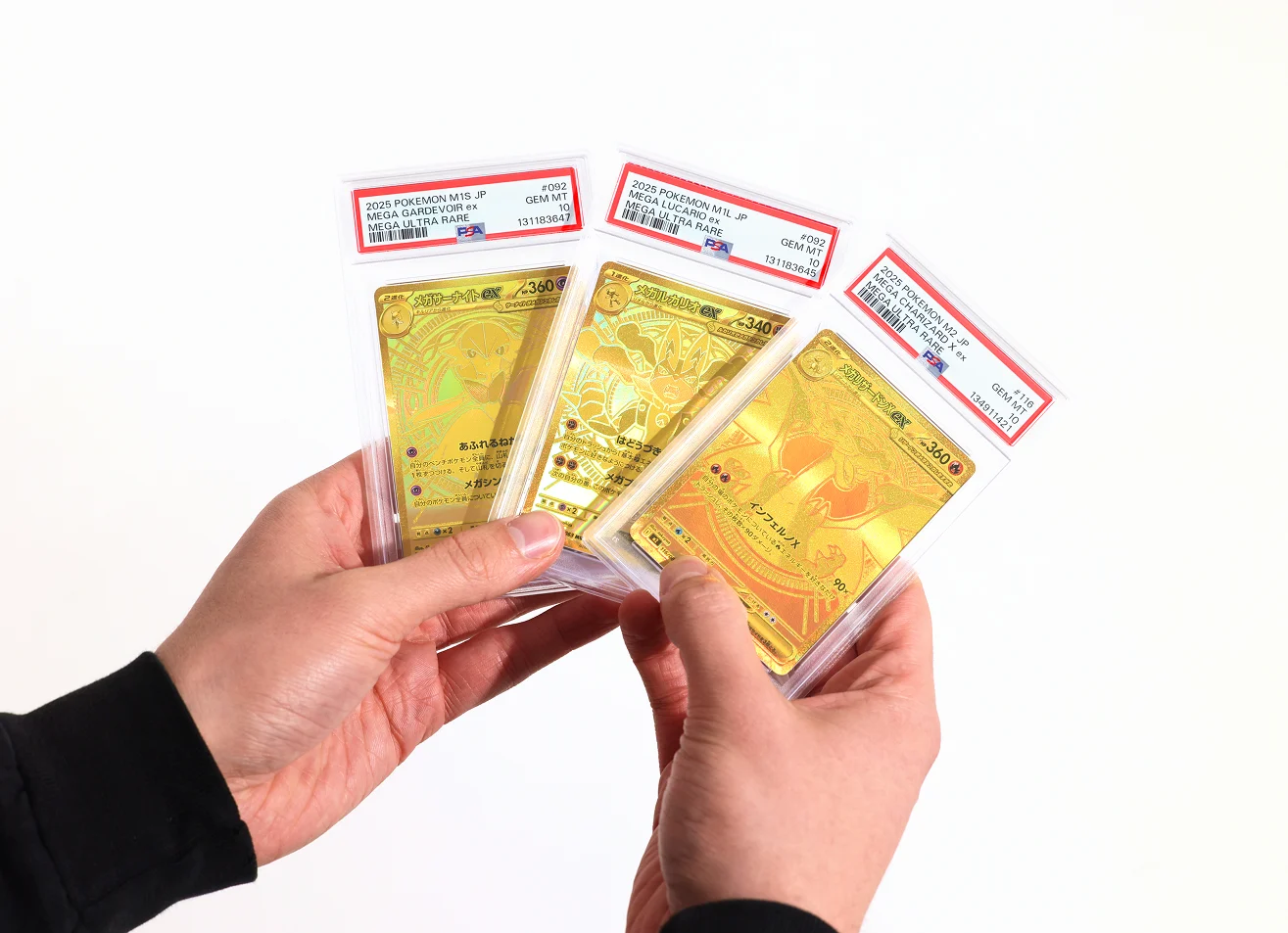
The card grading bottleneck that has been building all year finally broke through this week. Within days of each other, PSA and TAG both pulled their entry-level submission tiers offline. It is the clearest sign yet that demand in 2026 has outrun the industry's ability to process it. For collectors sitting on stacks of modern cards, the cheapest doors into grading just closed at both companies at once.

Thank you to TheGamer for this image
PSA has temporarily paused all four Value tiers (Value Bulk, Value, Value Plus, Value Max) effective June 2, 2026.[1] TAG has closed its Basic and Standard tiers, and now Express as well, marking them "at capacity until further notice."[2] In both cases, only the faster, more expensive tiers remain open.
PSA: a 20% demand spike and a 10-million-card backlog
What PSA changed
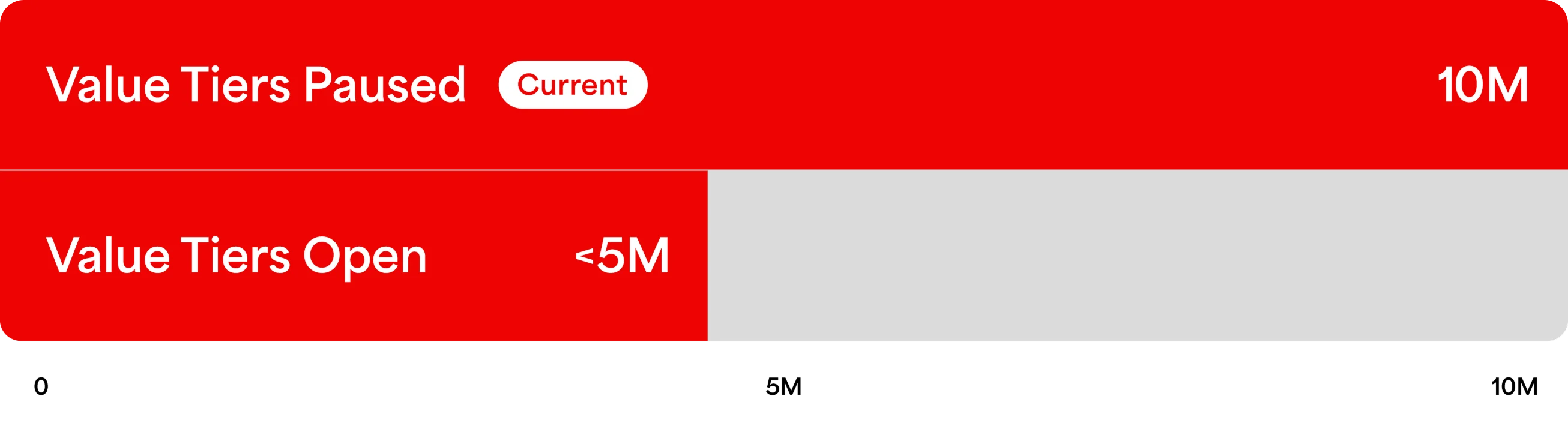
In its May 2026 Service Level Update, PSA announced it was temporarily pausing new submissions for its four Value service levels (Value Bulk, Value, Value Plus, and Value Max) effective Tuesday, June 2, 2026. The company pointed to a roughly 20% surge in submissions after it announced infrastructure investments and updated turnaround times. That spike added about 1.6 million cards and pushed the active backlog toward nearly 10 million cards.[1]
Thank you to PSA for this image
Thank you to PSA for this image
What stays open at PSA
Regular, Express, Super Express, and Walk-Through (and above) remain fully active. The trade-off is time: estimated turnaround for Regular service was temporarily extended to 40–50 days, and 50–60 days for dual-service authentication. PSA says its goal is to bring the backlog down to 5 million cards, a process it expects to take roughly four months.[1]
PSA is offering Value-tier customers some compensation. Every Collectors Club membership active on May 14, 2026 (and kept active) is being extended for free for the full duration of the Value Bulk pause. The company also launched a public backlog tracker to give collectors more visibility into where their cards sit in the queue, a notable transparency move during a frustrating stretch.[1]
TAG: Basic and Standard go dark, then Express follows
What TAG changed
TAG's grading page now carries a blunt banner: "Regular grading tiers currently at capacity." The company's Basic (~$22/card) and Standard (~$39/card) tiers filled up earlier in the month, and TAG has since closed its Express (~$59/card) tier as well.[4] In TAG's words: "Due to incredible demand, Express is now closed, marked at capacity until further notice. Following Basic and Standard earlier this month, our core tiers are full."[2]
Due to incredible demand, Express is now closed, marked at capacity until further notice. Following Basic and Standard earlier this month, our core tiers are full.
What stays open at TAG
Only TAG's two highest tiers remain available, and on a limited basis: Priority (~$149/card) and Walkthrough (~$299/card).[4] Collectors who need a card encapsulated immediately can still use TAG Verified Authentic, which slabs an ungraded card without assigning a numeric grade. TAG says it is scaling staff and throughput to work down the backlog and reopen the closed tiers, but has not committed to a reopening date.[2]
Why this is happening to everyone at once
Two companies hitting the same wall in the same week points to a system-wide squeeze. As PSA's queue ballooned, collectors rerouted submissions to alternatives like TAG and CGC, which in turn pushed those graders into their own capacity limits. CGC has reported extended turnaround times on its budget Bulk and Economy tiers, without raising prices, and has been hiring additional inspection staff.[4] The result is an industry where the cheapest grading is the first thing to disappear when demand spikes.
Thank you to GemRate for this image
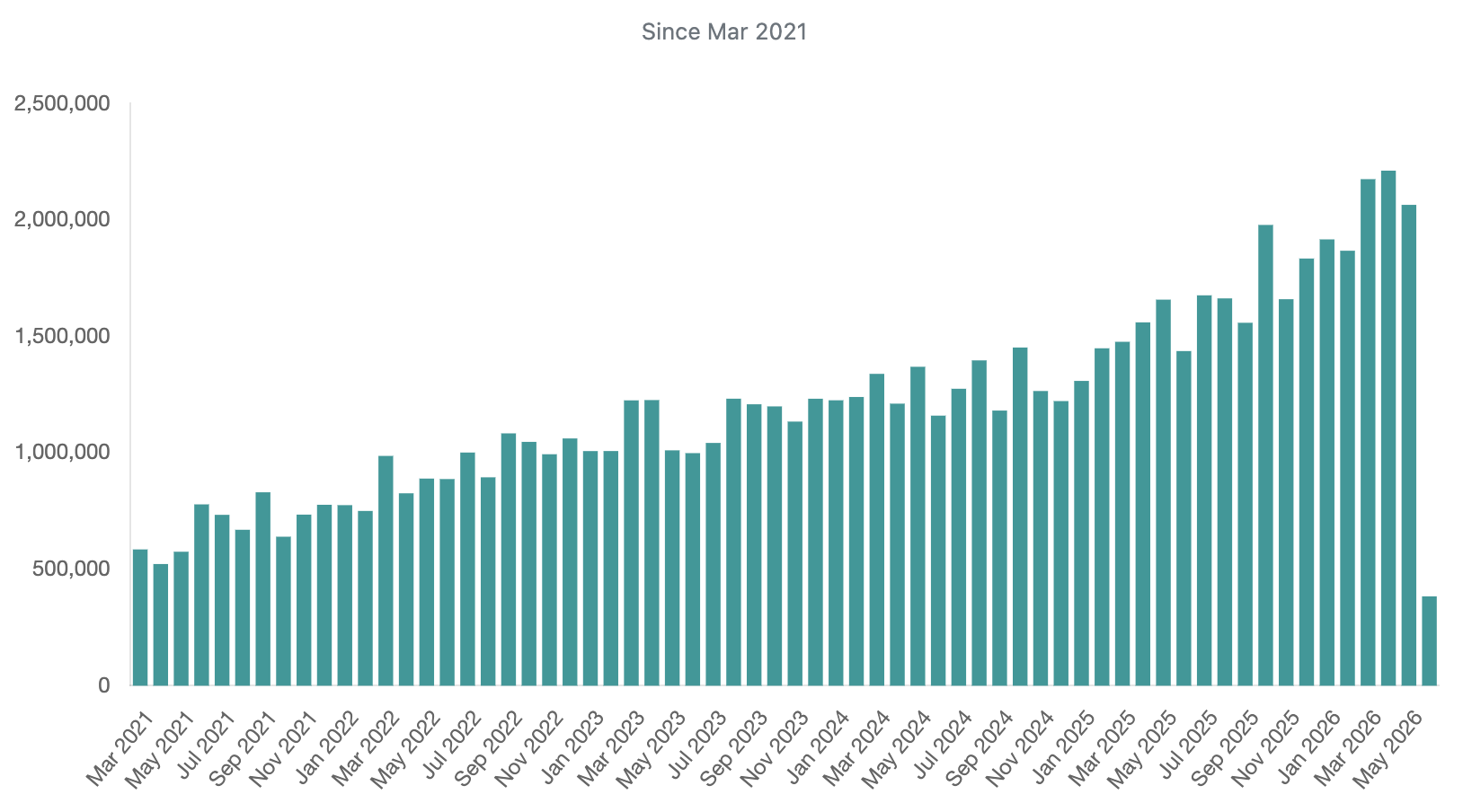
The scale gap between these companies explains a lot. According to GemRate, PSA graded roughly 100,000 cards on June 4, 2026, while TAG graded about 600 the same day.[3] PSA can absorb a demand surge by extending turnaround times; at a few hundred cards a day, TAG's lower tiers fill up and hit capacity far faster.
Doing the math: how fast could the backlog clear?
Run PSA's own numbers and the timeline comes into focus. At about 100,000 cards graded per business day, and assuming no further submissions are made at all, here is how long the roughly 10-million-card backlog would take to work down. To reach PSA's 5-million target, it needs to clear 5 million cards, which is 5,000,000 ÷ 100,000 = 50 business days (about 10 working weeks, or roughly two and a half calendar months). To grade the entire 10-million backlog, that is 10,000,000 ÷ 100,000 = 100 business days (about 20 working weeks, or close to five calendar months). The "no new submissions" assumption is doing heavy lifting here. In reality cards keep arriving, which is why PSA itself estimates around four months[1] just to reach the 5-million mark rather than the 50 business days the raw division suggests.
If your plan was to bulk-submit modern cards through a Value or Basic tier, that option is paused at both PSA and TAG for now. Your realistic choices: wait for the cheap tiers to reopen, pay up for a faster tier (which often only makes financial sense on higher-value cards), or route to a third grader like CGC and accept longer turnaround. For low-dollar cards, the math frequently says hold. Paying $149 to grade a $30 card rarely pencils out.
The bottom line
The 2026 grading boom has finally hit a hard ceiling. PSA is betting that a four-month push plus a public backlog tracker can rebuild trust while it digs out from nearly 10 million cards;[5] TAG is racing to add capacity before its closed tiers cost it momentum. For collectors, the takeaway is simple: grading just got slower and more expensive at the entry level, and it's worth watching the backlog trackers before you ship anything.