Before you buy sleeves or fill out your submission form, answer one question honestly: is this card actually worth grading? The cost of grading (fees, shipping, insurance, and your time) means most cards will never be worth the submission cost. Starting here saves you money in the long run.
Investor or Collector?
Know Your Motivations
Grading is not a mandatory part of enjoying card collecting. You will first need to understand why you want to get your cards graded. Most people fall under 2 camps. Understanding which is which and which you are will help shape your decision making regarding grading from here on.

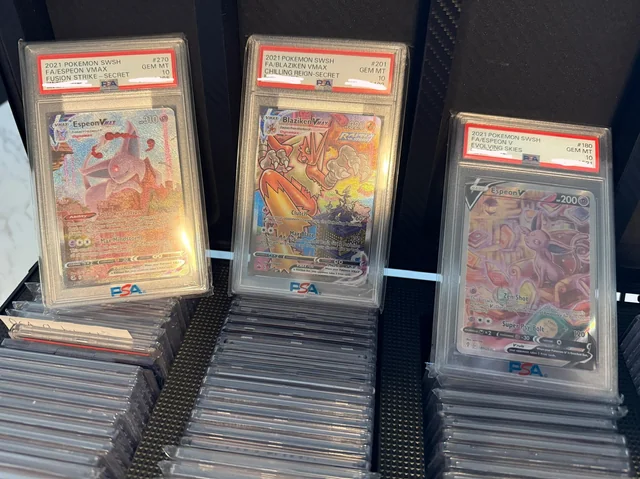
Thank you to Oyama's Trading on YouTube for this image
The Investor
Investors submit cards they intend to sell for profit. They are chasing a grade that puts a card into a high-value population tier, usually a PSA 9 or 10 on a card with thin population and strong demand. Every submission is calculated to give them the highest projected return on investment (submission cost + expected grade = projected return).
Thank you to u/LostCharizardTCG on Reddit for this image
The Collector
Collectors submit cards that they want to own forever in the best possible (preserved) condition. ROI matters less than authenticity, preservation, and the satisfaction of displaying a slab. Collectors may grade a card worth $5 simply because it is a personal favorite.
Many collectors grade cards they love and cards they plan to flip. There is nothing wrong with having a mixed collection. Just be clear about which motivation applies to each specific card before you submit it.
The Honest Question
Grading can, and often does, go wrong. Either grades you did not expect, shipping delays / technicalities, longer wait times than expected and much much more. This website will try to prepare you to be in a position to deal with anything thrown your way. But always is better to be prepared.
Be honest with your intentions before the cards are shipped out, not after.
Evaluating a Card's Worth
Once you know your motivation, the next step is calculating whether a specific card justifies submission. The process differs for investors and collectors, but both need to do some homework.
For Investors: Run the Numbers
Look up recent sold prices for graded copies at PSA 9 and PSA 10 on eBay. Subtract the grading fee, shipping, and a realistic assessment of the grade the card will receive based on your pre-screening. If the margin is thin at a PSA 10 and non-existent at a PSA 9, the card should stay raw.
For Collectors: Grade What Matters
Grade what matters to you. Just go in knowing that the financial return may be zero, and in most cases, less than zero. The value of a slab to you should be permanence, authenticity, or pride of ownership. Those are legitimate reasons to submit, even for a card that will never appreciate.
Making the Decision
The Break-Even Test
For any card you are considering as an investment: graded price at realistic grade minus submission fee + shipping + insurance = your actual return. If this number is negative at a PSA 9, the card needs to be a PSA 10 to be profitable. Not all cards grade that high.
A very rough estimate to take for the submission + shipping + insurance fee (as of April 2026) is $35 per card.
Submitting a card because you hope it grades a 10 is gambling. Grade expectations must be grounded in honest pre-screening and population data. The grader does not care how much you paid for the card.
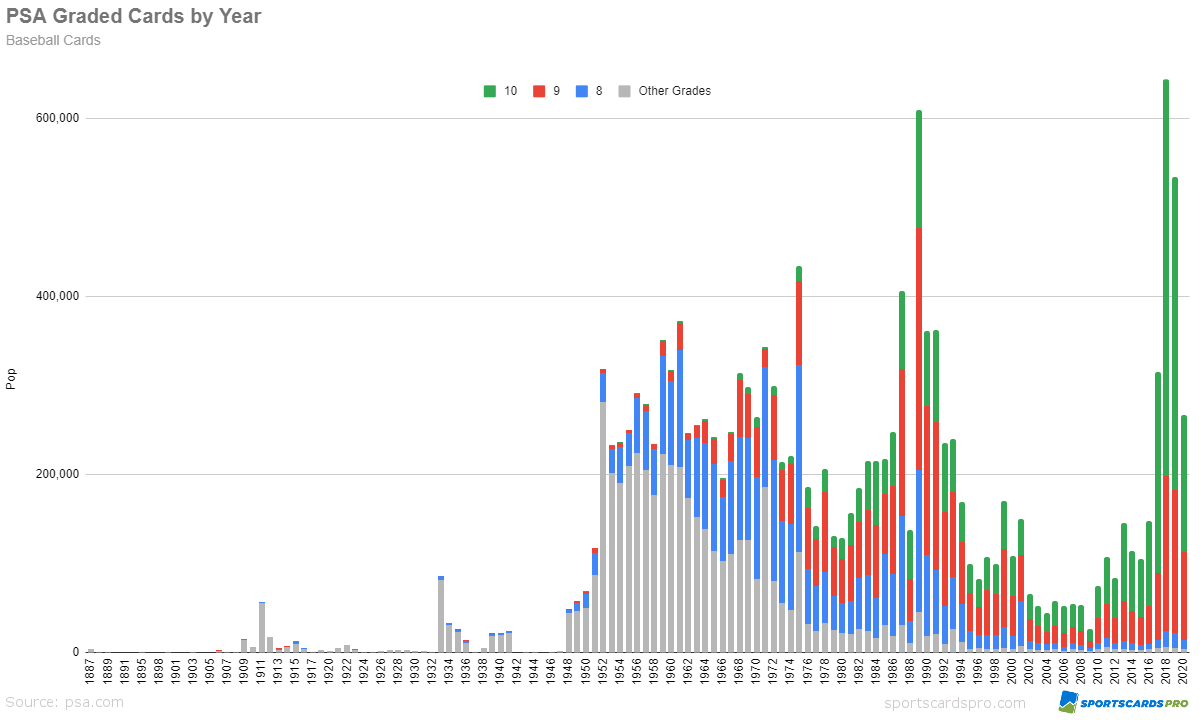
Check how many copies of a card exist at each grade before submitting. A PSA 10 in a population of 5,000 is worth far less than one in a population of 50.
The only price that matters is what someone actually paid. Filter by "Sold" to see real transaction prices for graded copies of your card.